Services · FDD as of 2025 · reviewed July 2026
7-Eleven Franchise Cost (2026): Investment, Fees & the 18% Royalty
7-Eleven's franchise fee is set per-store, not fixed, and can range from $0 to over $1 million. The 18% royalty is the highest on this list.
$142,150–$1,600,000 total investment 18% royalty
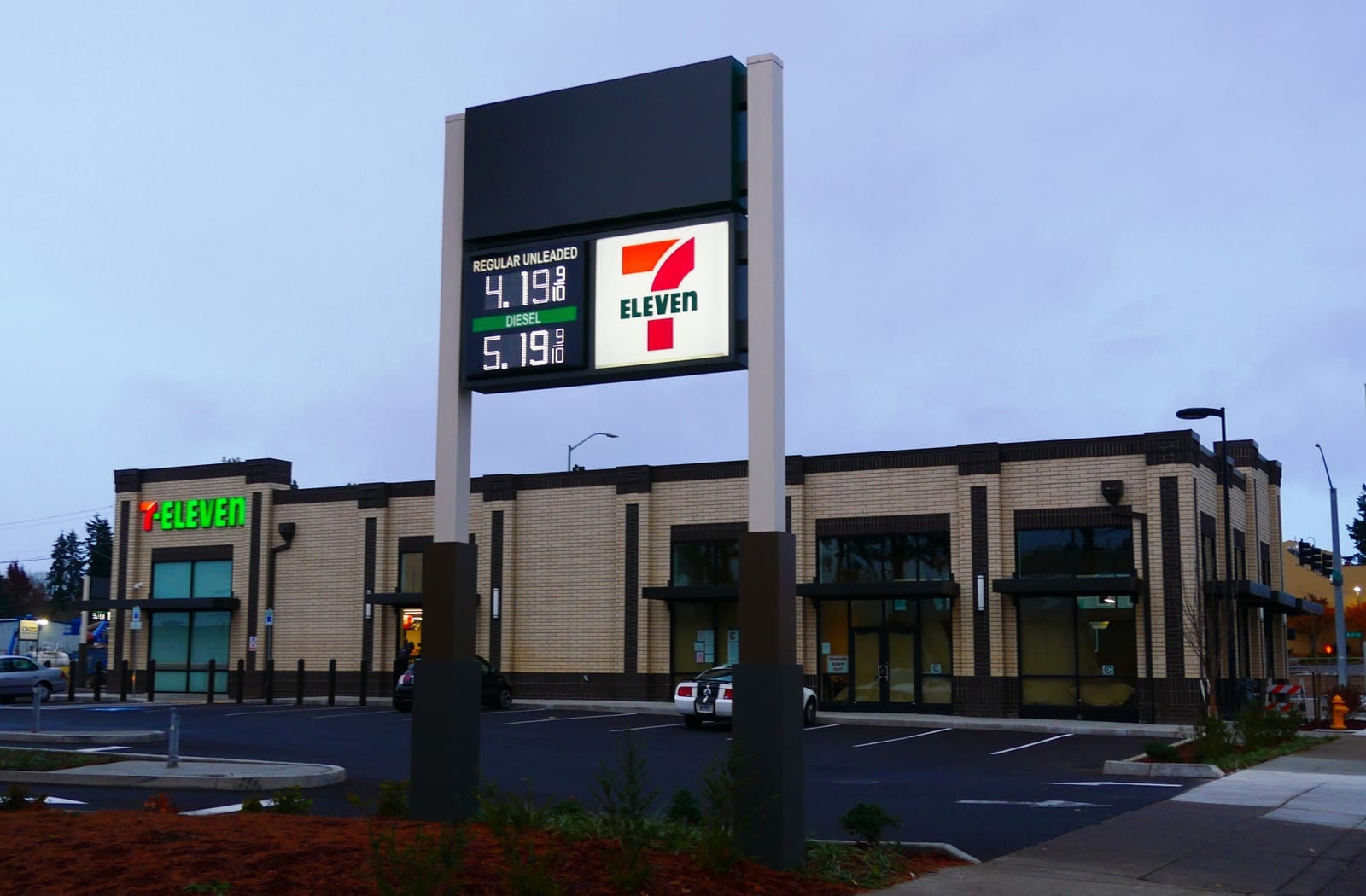
7-Eleven franchise cost, itemized
From 7-Eleven's FDD, as of 2025. Every figure below traces to a specific FDD item.
Total initial investment (FDD Item 7)
$142,150–$1,600,000
The all-in range: franchise fee, build-out, equipment, inventory, and working capital.
- Franchise fee Item 5
- Varies 7-Eleven does not charge a fixed fee. The fee is set per-store, from $0 to $1,100,000, based on the store's historical sales, age, and local availability. There is no single 'the fee' to quote.
- Ongoing royalty Item 6
- 18% of gross sales
- Liquid capital required
- $50,000 minimum
Figures from the 2025 FDD or the franchisor's current disclosure. Paraphrased from public filings, not reproduced verbatim. Your actual cost will vary by market, real estate, and build-out condition.
Is a 7-Eleven franchise worth it?
7-Eleven does not publish unit-level revenue. Item 19 of its FDD (Financial Performance Representations) is optional under FTC franchise rules, and many franchisors, 7-Eleven included as of the 2025 FDD, choose not to disclose one. That means there is no honest revenue or ROI number to report here, and anyone who gives you one is guessing or cherry-picking.
The workaround real buyers use: ask the franchisor for its Item 20 list of existing franchisees, then call at least five current owners directly and ask what they actually made last year, after royalties. That's the only reliable Item 19 substitute.
7,218 units operating (Item 20, 2025 FDD), a rough health signal: steady or growing counts suggest the model is working for existing owners.
Every other franchise on this list has a fee you can quote as a single number or a narrow range. 7-Eleven doesn’t work that way. The franchise fee is set per store, anywhere from $0 to $1,100,000, based on that specific location’s sales history, how long it’s been open, and how many other stores are available for franchising nearby. Two people franchising two different 7-Eleven locations in the same month could pay wildly different fees.
That’s because most 7-Eleven franchising happens through existing, already-operating stores, not new construction. You’re often buying into a store with a real sales history, and the fee reflects what that specific store’s track record is worth, not a flat licensing charge. The disclosed total investment range, $142,150 to $1.6 million, reflects that same variability.
There’s also a separate track: the Business Conversion Program. It’s built for someone who already owns and runs an independent convenience store and wants to bring it under the 7-Eleven brand and system rather than build new. The economics there differ from both a new-build and an existing-store franchise, so if you’re already in the c-store business, ask about this path explicitly rather than assuming the standard fee range applies to you.
Whichever track you enter through, every candidate goes through 7-Eleven’s C.O.O.L. (College of Operations Leadership) training program before getting a store: roughly 300 hours spread across 6 to 8 weeks, split between the company’s Store Support Center in Irving, Texas, and hands-on time at an active training store. It’s a heavier, longer training commitment than several brands on this list, and it’s mandatory, not optional, before the franchise agreement’s effective date. That reflects the same bundled-support philosophy behind the 18% royalty: 7-Eleven is training you to run its systems, not just licensing you to use its name.

The 18% royalty is the highest on this list, and it’s structured differently
7-Eleven charges 18% of gross profit as an ongoing royalty, the steepest headline rate of any brand covered here. Before you compare it to Little Caesars’ 13% or anyone else’s, though, note the basis: it’s 18% of gross profit, not gross sales, and every other brand on this list charges against gross sales. Those two percentages are measuring different pools of money, so putting them side by side tells you almost nothing. In exchange, 7-Eleven’s traditional model typically bundles in the store building itself, initial inventory financing, and back-office support functions (accounting, some merchandising) that most franchisors leave entirely to the operator. It’s a more hands-on, more bundled arrangement, and the fee reflects that.
A shrinking system, and a parent company under pressure
Recent FDD data shows 7-Eleven’s franchised unit count declining, with net losses in the high single digits as a percentage of the system. That’s a real trend to factor in, especially if a specific store opportunity is being pitched as part of ongoing “growth.”
There’s context worth knowing at the corporate level, too. 7-Eleven’s parent, Japan’s Seven & I Holdings, spent more than a year fending off a takeover approach from Canadian convenience-store giant Alimentation Couche-Tard, which raised its bid to roughly $47 billion before dropping the pursuit in mid-2025, citing a lack of constructive engagement from Seven & I’s board. That saga is over for now, but it happened at all because 7-Eleven’s core U.S. business has been under real pressure, the same pressure showing up in the declining franchised-unit count. A prospective franchisee isn’t buying into a company coasting on stability; you’re buying into one that recently fought off the largest hostile approach in convenience-store history while its domestic store count was shrinking.
Is a 7-Eleven franchise worth it?
7-Eleven’s per-store, sales-history-based fee structure means there’s no generic answer to “is 7-Eleven worth it.” The honest answer depends entirely on the specific store being offered: its sales history, its fee, its location. The 18% royalty is real and steep, but it comes bundled with more franchisor-provided infrastructure than most brands on this list offer at a lower rate. Evaluate the specific store, not the brand in the abstract. If you want a brand where the number on the page is the number you’ll actually pay, the lowest-royalty franchises publish a flat percentage you can plan against, and the affordability estimator checks your capital against every brand’s disclosed minimums at once.
The liquid capital bar itself is a moving target across sources, some cite $50,000 as the floor, others put it as low as $30,000 or as high as $150,000, likely reflecting the fact that a low-volume rural store and a high-volume urban store with a fuel island simply require different reserves. That’s actually consistent with everything else about this brand’s cost structure: almost nothing about 7-Eleven franchising is a single number. Ask for the specific store’s trailing twelve months of sales, the specific fee that store carries, and the specific working-capital requirement your franchise business consultant sets for it, before comparing 7-Eleven’s economics to any other brand on this list. The comparison only means something at the individual-store level here.
Curious how 7-Eleven stacks up against another brand you're considering? Compare it side by side against up to three other franchises.