QSR · FDD as of 2025 · reviewed July 2026
Jersey Mike's Franchise Cost (2026): Investment, Fees & ROI
Jersey Mike's total investment runs $436,000-$1.16M, with an $18,500 fee and an 11.5% combined royalty and ad fee. Here's the real all-in number.
$436,176–$1,162,000 total investment 6.5% royalty
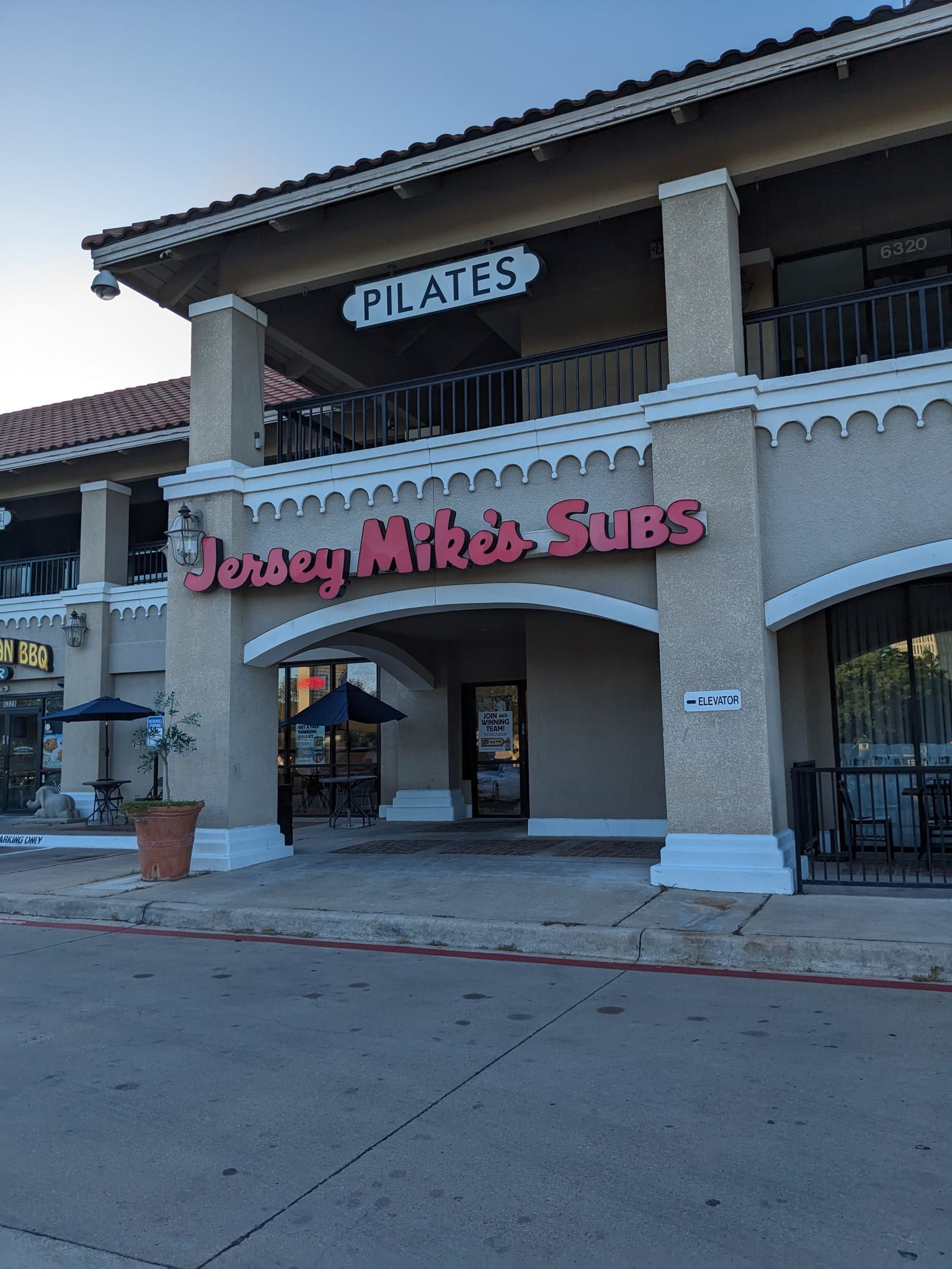
Jersey Mike's franchise cost, itemized
From Jersey Mike's FDD, as of 2025. Every figure below traces to a specific FDD item.
Total initial investment (FDD Item 7)
$436,176–$1,162,000
The all-in range: franchise fee, build-out, equipment, inventory, and working capital.
- Franchise fee Item 5
- $18,500
- Ongoing royalty Item 6
- 6.5% of gross sales
- Ad / marketing fund Item 6
- 5% of gross sales
- Liquid capital required
- $100,000 minimum
- Net worth required
- $300,000 minimum
Figures from the 2025 FDD or the franchisor's current disclosure. Paraphrased from public filings, not reproduced verbatim. Your actual cost will vary by market, real estate, and build-out condition.
Is a Jersey Mike's franchise worth it?
Jersey Mike's does not publish unit-level revenue. Item 19 of its FDD (Financial Performance Representations) is optional under FTC franchise rules, and many franchisors, Jersey Mike's included as of the 2025 FDD, choose not to disclose one. That means there is no honest revenue or ROI number to report here, and anyone who gives you one is guessing or cherry-picking.
The workaround real buyers use: ask the franchisor for its Item 20 list of existing franchisees, then call at least five current owners directly and ask what they actually made last year, after royalties. That's the only reliable Item 19 substitute.
Jersey Mike’s all-in investment range, per its 2025 FDD, is $436,176 to $1.162 million. That includes $47,250 to $49,250 that goes straight to the company as the franchise fee and other startup charges, with the rest split across leasehold improvements, kitchen equipment, signage, and opening inventory.
One operational detail that’s easy to miss and genuinely affects the unit economics you’d be buying into: Jersey Mike’s says digital orders, placed through its MyMikes app, now account for roughly 42% of revenue, and its loyalty program has grown past 12.5 million members, up 62% since 2021. A sandwich shop that routes nearly half its volume through a mobile app has different labor and throughput needs at peak hours than one that doesn’t, which is worth asking about specifically when you talk to existing operators about staffing model and line speed.
What’s the Jersey Mike’s royalty?
6.5% royalty on gross sales, plus 5% into the ad fund, comes to 11.5% combined, gone before rent, labor, or ingredient cost. That 5% ad fund itself splits two ways: 1% goes into a Corporate Advertising & Development Fund and 4% into a National Media Fund, per the company’s fee disclosures. That’s lighter than Little Caesars, where a 6% royalty and a 7% ad contribution combine to 13%, and lighter than Subway’s 12.5%. In the sandwich-and-sub category specifically, it’s roughly in line with the segment.
The financial bar to clear is a $300,000 net worth and $100,000 in liquid capital, on top of the $47,250-$49,250 that goes to the company upfront across the franchise fee and other opening charges. That’s a lower liquid-capital ask than Wingstop or Popeyes, which is part of why Jersey Mike’s remains one of the more approachable full-service sub-sandwich franchises for a first-time owner-operator with real but not massive capital behind them.
A system that’s actually growing, and now headed for Wall Street
Unlike some legacy sandwich chains that have reported net unit losses in recent years, Jersey Mike’s has publicly reported continued year-over-year growth: 3,236 stores as of December 28, 2025, after adding a net 238 locations that year, following gains of 314 in 2024 and 288 in 2023. The company filed an S-1 for a public offering on July 2, 2026, and its own filing discloses 20 consecutive years of positive same-store sales growth, including double-digit gains during the pandemic, plus systemwide sales of $4.3 billion, up 13% year over year.
That filing also states 90% of its roughly 1,600-unit domestic development pipeline is committed to existing franchisees rather than brand-new operators, and the company is targeting 7,500 U.S. locations and 15,000 globally over time, arguing it’s still underpenetrated in most markets. For a prospective franchisee, the practical read is twofold: the brand’s growth trajectory is about as strong as anything in the sandwich category right now, and the fastest path in as a first-time buyer is likely a smaller market or a resale, since new development is heavily weighted toward operators the company already has a relationship with.

Is a Jersey Mike’s franchise worth it?
Jersey Mike’s sits in a comfortable middle tier: an investment range accessible to a serious individual buyer (not requiring the multi-million-dollar net worth some QSR brands demand), a moderate ongoing fee load, and a growth trend that’s holding up better than nearly every sandwich-category competitor. It doesn’t publish an Item 19 revenue figure, so any real read on unit economics requires talking to existing franchisees directly through the company’s Item 20 disclosure list, though third-party estimates built from its disclosed systemwide sales and unit count put average unit volume in the neighborhood of $1.2-$1.3 million, worth treating as a directional estimate rather than a company-verified number.
Going public doesn’t change what you’d pay to open a store, but it’s a signal worth weighing: a newly public Jersey Mike’s answers to shareholders now, not just franchisees, which can mean more disciplined site selection and more corporate marketing dollars, or it can mean pressure to keep opening units faster than a given market can support. Either way, it’s a different company than the one that existed a year ago, and that’s a live variable for anyone signing a 10-plus-year agreement today.

Curious how Jersey Mike's stacks up against another brand you're considering? Compare it side by side against up to three other franchises.