QSR · FDD as of 2025 · reviewed July 2026
McDonald's Franchise Cost (2026): Investment, Fees & ROI
McDonald's total investment runs $1.47M-$2.73M, with a $45,000 franchise fee and a 4% royalty. Here's the real all-in number and the payback math, from the FDD.
$1,471,000–$2,728,000 total investment 4% royalty
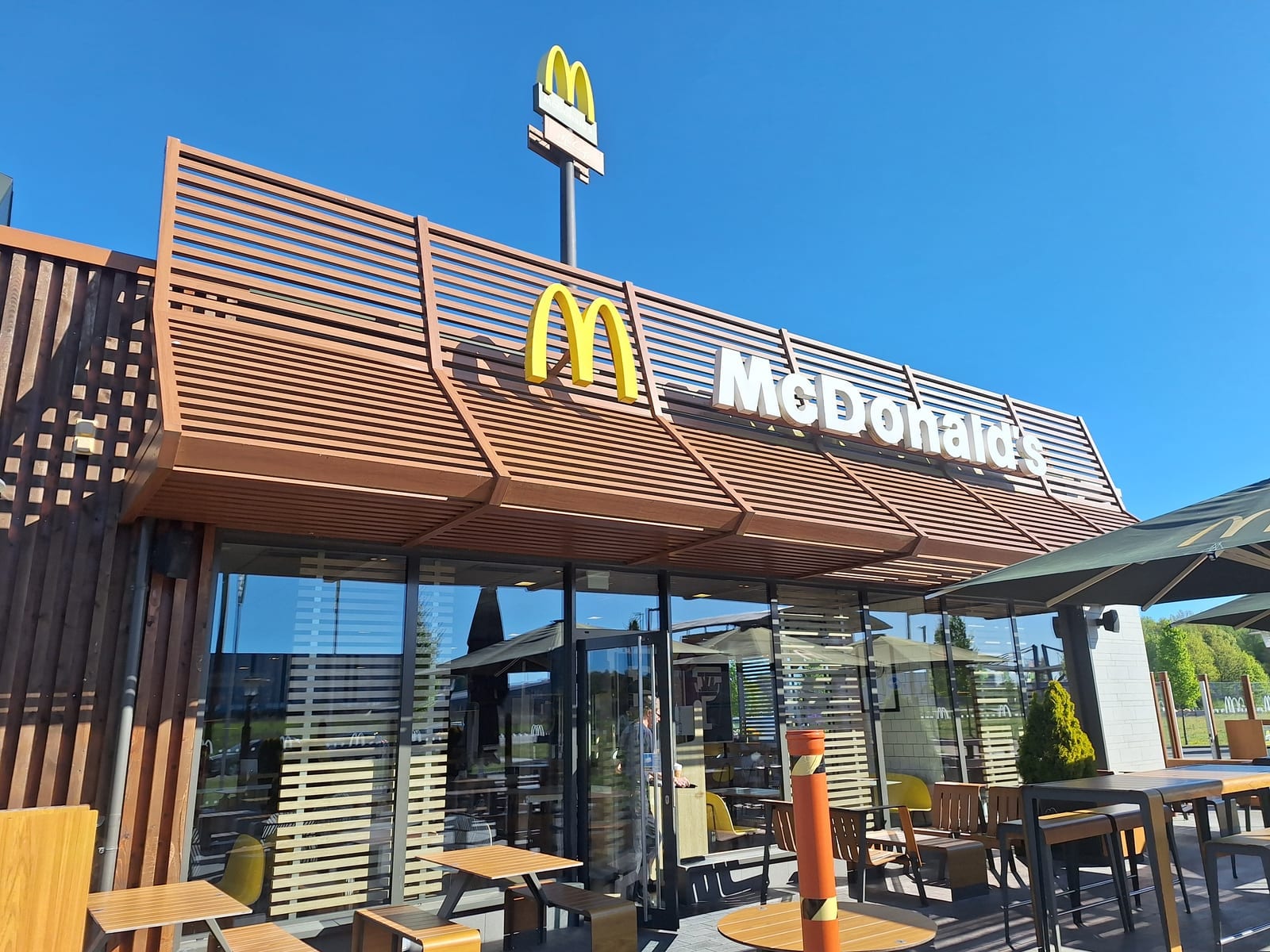
McDonald's franchise cost, itemized
From McDonald's FDD, as of 2025. Every figure below traces to a specific FDD item.
Total initial investment (FDD Item 7)
$1,471,000–$2,728,000
The all-in range: franchise fee, build-out, equipment, inventory, and working capital.
- Franchise fee Item 5
- $45,000
- Ongoing royalty Item 6
- 4% of gross sales
- Ad / marketing fund Item 6
- 4% of gross sales
- Liquid capital required
- $500,000 minimum
- Net worth required
- $1,000,000 minimum
Figures from the 2025 FDD or the franchisor's current disclosure. Paraphrased from public filings, not reproduced verbatim. Your actual cost will vary by market, real estate, and build-out condition.
Is a McDonald's franchise worth it?
Average unit revenue (FDD Item 19)
$3,900,000/year
After royalty + ad fund (8%)
~$3,588,000/year
Rough payback read
~0.6 years
This is a rough scale, not a profit estimate. It divides the mid-point investment by revenue left after royalty and ad fund, with no deduction for labor, food or supply cost, rent, insurance, or debt service. Real net margin at a McDonald's location typically runs well below top-line revenue. Ask any franchisee candidate list the franchisor provides for their actual profit-and-loss numbers before you sign anything. Figures as of the 2025 FDD.
12,887 units operating (Item 20, 2025 FDD), a rough health signal: steady or growing counts suggest the model is working for existing owners.
The number McDonald’s puts on its own recruiting page is $45,000. That’s the franchise fee, and it’s the number every “McDonald’s franchise cost” search result leads with. It’s also the smallest line item on the bill by a wide margin.
McDonald’s own FDD puts the real all-in investment at $1,471,000 to $2,728,000 for a traditional restaurant. That range covers the building or lease buildout, kitchen equipment, signage, a point-of-sale system, and the working capital McDonald’s requires you to have on hand, usually $250,000 to $439,000 just for the first three months. The fee is a rounding error next to the equipment and real estate. Most first-time franchisees end up somewhere in the middle of that range or higher once their specific site’s real estate and buildout costs are factored in.
McDonald’s also runs a structure a lot of other QSR brands don’t: in most traditional deals, the corporation owns or leases the land and building itself, then subleases it to the franchisee. That changes the shape of the investment. Instead of buying dirt and a building outright, a chunk of what you’re paying every month is rent to McDonald’s, on top of the 4% royalty and 4% ad fund. It’s worth asking any McDonald’s field consultant directly what the site’s specific rent structure looks like before you assume the published range covers everything you’ll pay monthly.
Treat that as a footnote and you’ve missed the business. Rent is arguably the core of what McDonald’s actually does. The company owns roughly 45% of the land and 70% of the buildings under its restaurants worldwide, and rent collected from franchisees has become the larger share of the company’s franchise-related income, an estimated $7.9 billion in rent in a recent fiscal year against roughly $4.6 billion in royalties. That’s why McDonald’s has been called, not entirely as a joke, a real estate company that happens to sell hamburgers. For a franchisee, the practical upshot is that McDonald’s has a direct financial stake in your store’s sales performance beyond the royalty, because a meaningful slice of most rent structures scales with sales volume, not just a flat monthly number. When sales are strong, both sides benefit; when they’re weak, the percentage-rent portion typically eases too, which is one of the few built-in shock absorbers in the deal.
What the $45,000 fee actually buys
The fee licenses the trademark, the operating system, training, and access to McDonald’s supply chain and real estate pipeline. It does not include a single piece of kitchen equipment, a POS terminal, or a dollar of construction. Those show up in the Item 7 estimated initial investment, which is the range that actually determines whether you can afford this.

Most candidates buy an existing restaurant, not a new build
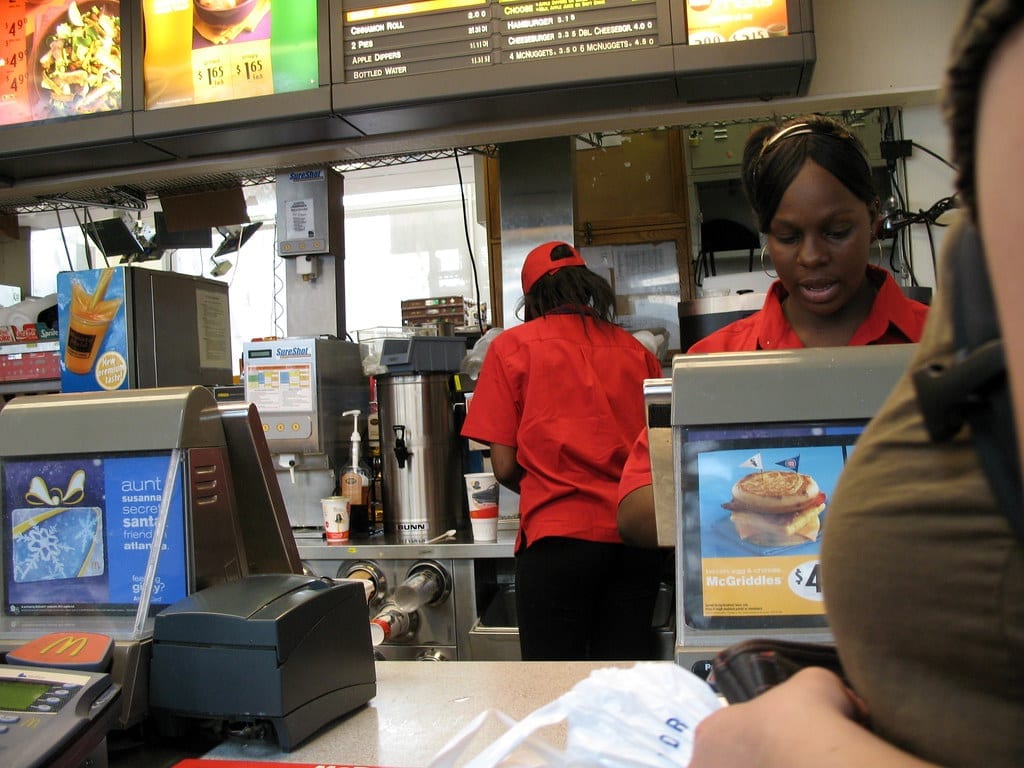
One detail that surprises a lot of first-time applicants: McDonald’s rarely hands a brand-new candidate a vacant lot and a construction budget. The company controls almost all new-restaurant development itself, McDonald’s does the site evaluation, buys or leases the property, and builds the restaurant, and then offers completed, already-operating restaurants to franchisee candidates, typically ones purchased from a retiring or exiting existing franchisee. That changes the financing math: buying an existing restaurant requires a minimum 25% cash down payment, with the balance financeable over up to seven years, while the rarer new-build path requires 40% in cash. Either way, before any of that, McDonald’s requires candidates to complete its own training program, which industry reporting describes as running anywhere from 6 to 12 months at minimum and, through the full Hamburger University curriculum from Shift Leader to Restaurant Leader certification, sometimes stretching to two years, combining structured coursework with real, paid hours working inside an actual restaurant. You’re not approved to run a McDonald’s until you’ve already worked one.
Where the real money goes
Roughly speaking, across the disclosed range: land and building costs (whether purchased, leased, or subleased through McDonald’s) and equipment eat the largest share, followed by signage, a required opening inventory, and the working capital reserve. McDonald’s requires a minimum liquid capital position before it will even consider an application, on top of a net worth threshold, both meant to confirm a candidate can absorb a slow ramp-up period without going under.
The agreement itself runs long, if you keep performing
A McDonald’s franchise agreement runs 20 years for the initial term, and the standard structure has historically included two additional 10-year renewal options, up to 40 years of runway on a single location if performance and compliance hold up throughout. That’s a genuinely long horizon compared to, say, Chick-fil-A’s year-to-year operator license, and it’s part of why the up-front capital bar is so much higher here: McDonald’s is licensing you to build equity in a business relationship over decades, not hiring you to run one it already owns. Renewal isn’t automatic, McDonald’s evaluates performance, brand-standard compliance, and the restaurant’s ongoing viability before granting it, and the company has been tightening its franchisee performance standards in recent renewal cycles. It’s also worth knowing that McDonald’s has run a $250 million initiative aimed at reducing the up-front equity barrier for qualified new franchisees, part of a broader push to diversify who gets into the system beyond existing multi-unit owners’ families, which is worth asking a McDonald’s field consultant about directly if the standard capital bar above is the sticking point.
The royalty and ad fund never stop
Once the restaurant opens, McDonald’s charges 4% of gross sales as an ongoing royalty and at least 4% more into the national advertising fund. That’s 8% of every dollar of revenue, gone before rent, labor, or food cost. Over a 20-year agreement, that adds up to far more than the initial fee ever will. It’s the number that matters more for long-run profitability than the sticker price on day one.
Is a McDonald’s franchise worth it?
McDonald’s discloses an average unit volume figure, publicly reported around $3.9 million a year system-wide as of the most recent filing. That’s revenue, not profit. Real McDonald’s franchisee economics depend heavily on the local rent structure (since McDonald’s Corporation is often the landlord, commonly charging somewhere in the 8% to 15% of sales range on top of the royalty), labor costs in that specific metro, and food cost discipline. A brand with McDonald’s scale, roughly 12,900 U.S. locations, has proven the model works somewhere. Whether it works at your specific site, at your specific rent, is the question an FDD alone can’t answer. That’s what talking to current franchisees in the market you’re considering is for. If the $500,000 liquid requirement is what’s stopping you, the lowest-cost franchises we’ve costed out start an order of magnitude below this, and the affordability estimator will tell you which ones your capital actually clears.
Curious how McDonald's stacks up against another brand you're considering? Compare it side by side against up to three other franchises.