QSR · FDD as of 2025 · reviewed July 2026
Taco Bell Franchise Cost (2026): Investment, Fees & ROI
Taco Bell's total investment runs $935,000-$4.3M, and the franchisor wants $5M net worth and $2M liquid before it'll even look at your application.
$935,000–$4,312,000 total investment 5.5% royalty
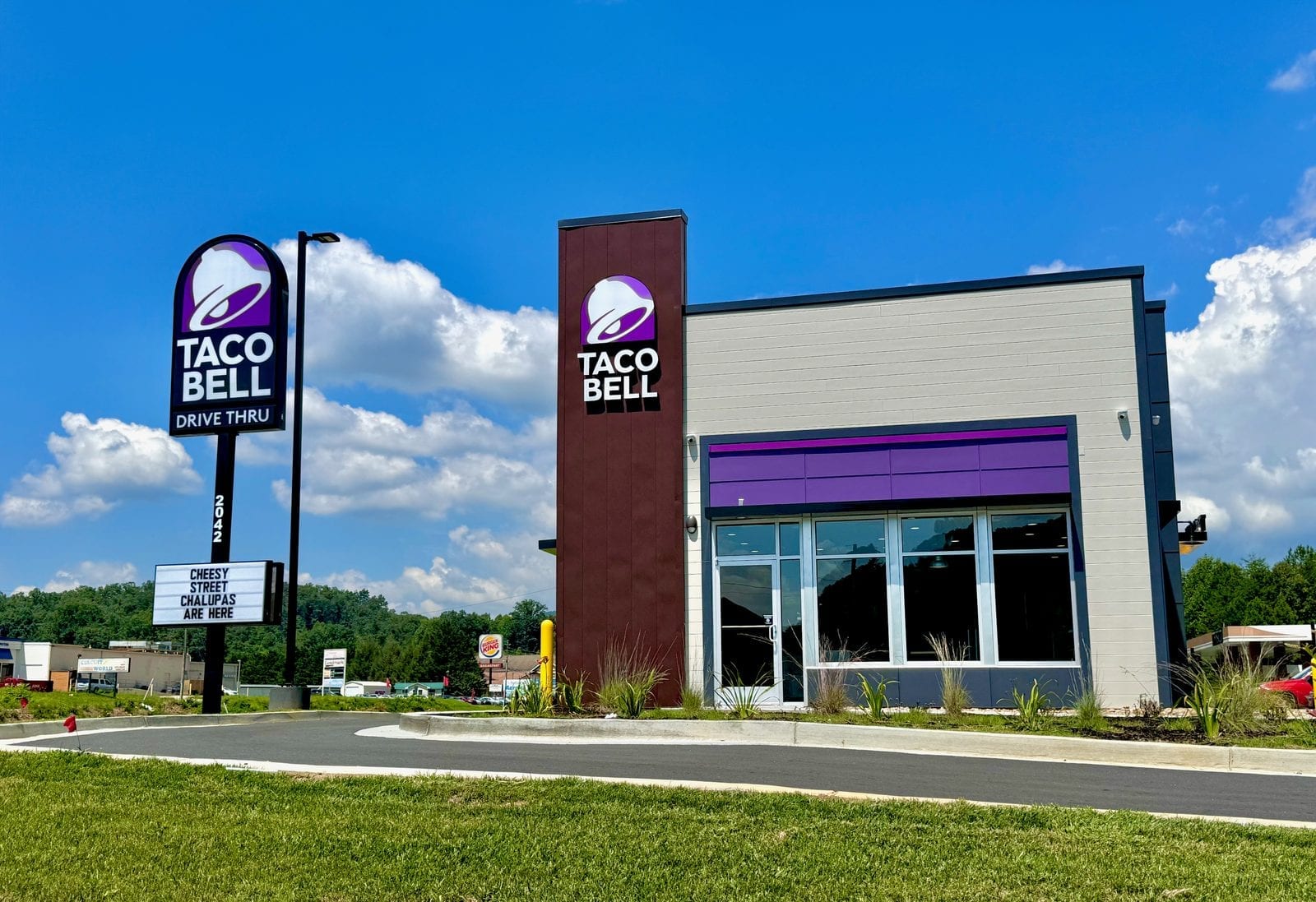
Taco Bell franchise cost, itemized
From Taco Bell's FDD, as of 2025. Every figure below traces to a specific FDD item.
Total initial investment (FDD Item 7)
$935,000–$4,312,000
The all-in range: franchise fee, build-out, equipment, inventory, and working capital.
- Franchise fee Item 5
- $25,000 Fee ranges $25,000-$45,000 depending on the specific development agreement.
- Ongoing royalty Item 6
- 5.5% of gross sales
- Ad / marketing fund Item 6
- 4.5% of gross sales
- Liquid capital required
- $2,000,000 minimum
- Net worth required
- $5,000,000 minimum
Figures from the 2025 FDD or the franchisor's current disclosure. Paraphrased from public filings, not reproduced verbatim. Your actual cost will vary by market, real estate, and build-out condition.
Is a Taco Bell franchise worth it?
Taco Bell does not publish unit-level revenue. Item 19 of its FDD (Financial Performance Representations) is optional under FTC franchise rules, and many franchisors, Taco Bell included as of the 2025 FDD, choose not to disclose one. That means there is no honest revenue or ROI number to report here, and anyone who gives you one is guessing or cherry-picking.
The workaround real buyers use: ask the franchisor for its Item 20 list of existing franchisees, then call at least five current owners directly and ask what they actually made last year, after royalties. That's the only reliable Item 19 substitute.
A Taco Bell costs $935,000 to $4,312,000 all-in, per the FDD, on a $25,000 to $45,000 franchise fee. Land, construction, and equipment dominate that number; the fee is a rounding error.
But the price isn’t what decides whether you can have one. The bar to apply is $5 million in net worth and $2 million in liquid capital. That’s not a typo, and it’s a different world from a brand like Subway or Jersey Mike’s, where a single operator with a few hundred thousand dollars can realistically get in. Yum! Brands, Taco Bell’s parent, has spent the last several years steering new franchise growth toward established multi-unit restaurant groups rather than first-time individual buyers, and the qualification numbers make that preference explicit.
Yum! doesn’t sell single-unit franchises to new operators at all. Every new Taco Bell franchisee signs a development agreement committing to build out a minimum number of restaurants, typically three to five or more, on a defined timeline measured in years. That structural choice is why the financial bar sits where it does: Yum! isn’t underwriting one restaurant’s worth of risk when it approves an application, it’s underwriting a multi-store buildout commitment, and it wants an operator who can absorb a slow-opening store or two without the whole development plan collapsing.
That $935,000-to-$4,312,000 spread is wide enough that it’s really describing several different businesses. At the low end is a small non-traditional format, a counter inside an airport or a university student union. At the high end is a full freestanding restaurant with a double drive-thru on land you had to buy. Two franchisees can both say “I opened a Taco Bell” and have spent a $3.4 million difference doing it, which is why the midpoint of that range is a useless planning number. Price the format you’re actually being offered.
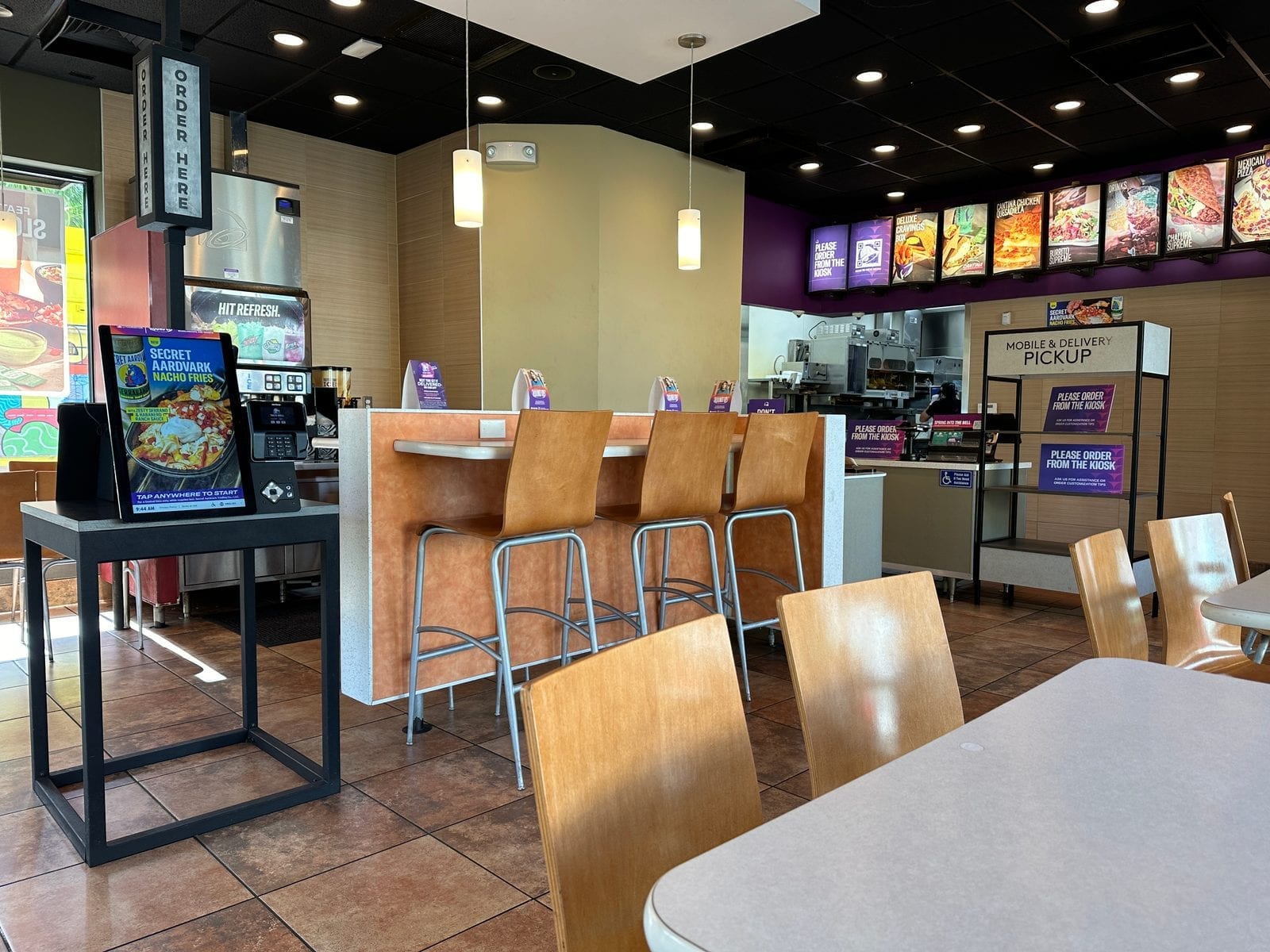
Part of that spread comes from Taco Bell now building in three genuinely different real-estate formats rather than one standard box. Traditional freestanding restaurants with a drive-thru are still the backbone of the system. Cantina locations are a newer, smaller-footprint urban format, no drive-thru, walk-up ordering, and a menu that includes alcohol, built for dense, walkable areas; the smallest one built so far runs about 1,200 square feet, a fraction of a traditional restaurant’s footprint. Non-traditional locations (airports, universities, travel plazas) round out the third tier. Taco Bell has also said publicly it wants to grow toward 10,000 total restaurants in the coming years, up from roughly 8,000 today, and a meaningful share of that growth is aimed at exactly the urban and non-traditional formats a first-time development-agreement candidate is more likely to be offered than a flagship freestanding lot.
The ongoing cost sits in the middle of the pack
Taco Bell charges 5.5% royalty plus up to 4.5% into the marketing fund, a combined 10% of gross sales. That’s less than Subway’s 12.5% but more than McDonald’s 8%, putting Taco Bell in a fairly typical range for major QSR ongoing fees.
Why this isn’t really a first-time-buyer brand anymore
The $5 million net worth threshold isn’t arbitrary. Multi-unit development agreements, where an operator commits to building several locations over a set timeline, are how Taco Bell (and most mature QSR brands) prefer to grow today. A qualification bar that high effectively filters for operators who already run restaurants at scale, or who are backed by private equity or a restaurant holding company. If you’re a first-time franchise buyer with a few hundred thousand dollars, Taco Bell is likely out of reach regardless of how much you like the brand.
Taco Bell sits inside a parent company that’s been actively reshaping its own portfolio. Yum! Brands announced in mid-2026 that it’s selling Pizza Hut entirely, roughly $2.7 billion combined between a buyer for the international business and Yum China taking the Mainland China unit, ending Yum!‘s three-brand structure. That’s not incidental context: it signals where Yum!‘s capital and franchise-development attention are actually going. With Pizza Hut on its way out of the portfolio, Taco Bell and KFC become the two brands Yum! is actively building around, and Taco Bell in particular has been posting standout same-store sales inside the company’s own reporting. An operator signing a development agreement today is buying into the brand Yum! is currently prioritizing, not a legacy asset getting quietly deprioritized the way Pizza Hut was before the sale.
No revenue figures to check your math against
Taco Bell’s FDD doesn’t include a standard Item 19 revenue disclosure the way some competitors do, so there’s no franchisor-published average unit volume or profit figure anywhere in the document. Anyone serious about the brand should request the Item 20 list of current and former franchisees and call several of them directly before assuming any revenue number floating around online is real.

Is a Taco Bell franchise worth it?
For an established multi-unit restaurant operator with the capital to clear the bar, Taco Bell’s brand recognition and system scale are real assets. The U.S. system runs close to 8,000 total restaurants, the vast majority franchised rather than company-owned, and the brand has real room left internationally too: outside the U.S. and mainland China (which Yum! reports separately through Yum China), Taco Bell operates a few hundred units across roughly two dozen countries, a much smaller international footprint relative to its U.S. base than McDonald’s or Subway carry, which is either a growth opportunity or a sign the brand travels less well internationally, depending on how you read it.
For an individual first-time buyer, the honest answer is that the qualification requirements alone make this one of the least accessible brands on this list. If the capital bar rules you out here, the QSR category has plenty of other brands (Wingstop, Jersey Mike’s, Little Caesars) with dramatically lower entry requirements.
Curious how Taco Bell stacks up against another brand you're considering? Compare it side by side against up to three other franchises.